
BY SALISU IBRAHIM FAGGE
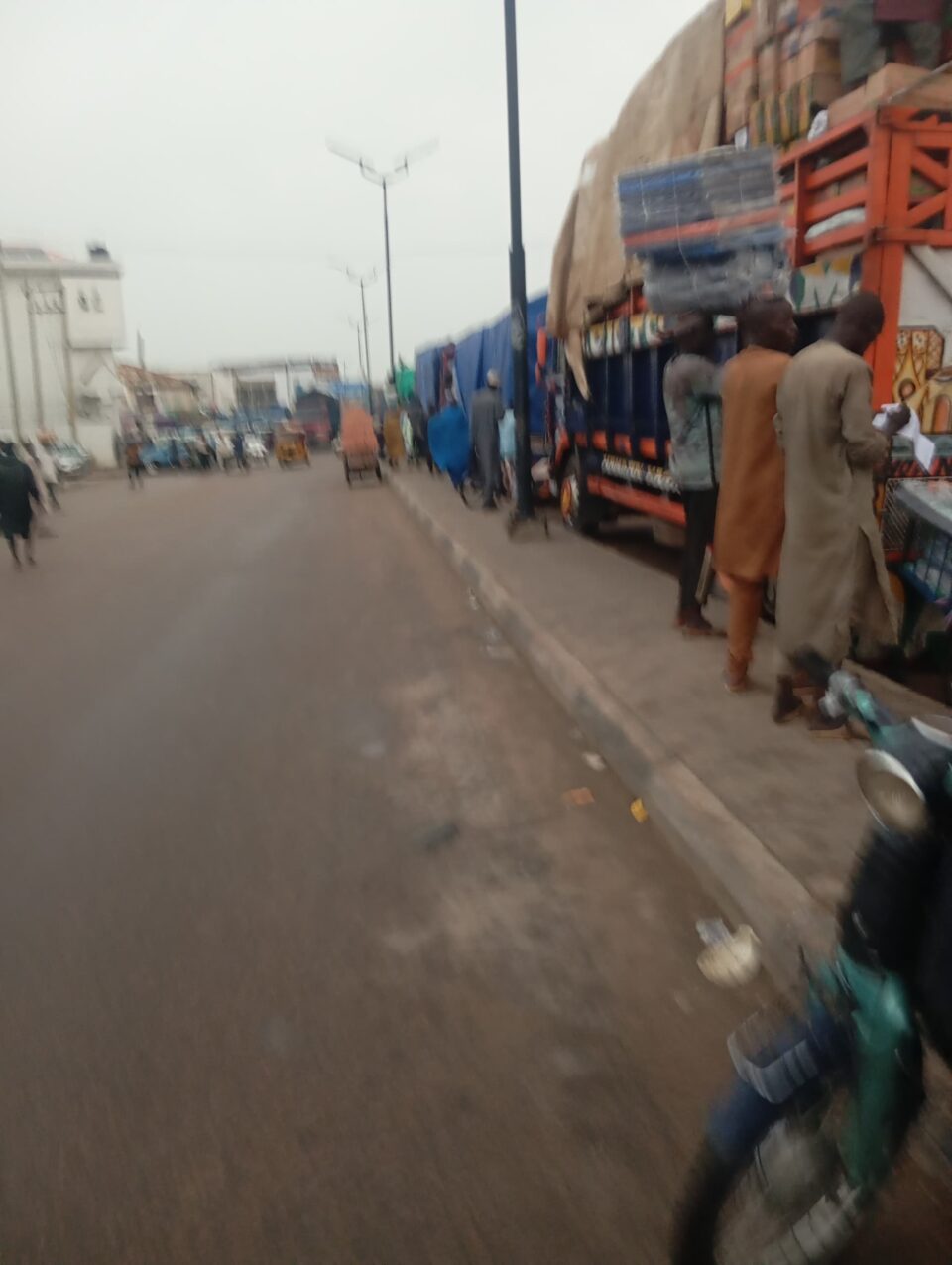
Every morning at 8:00 am, Ibrahim Taiwo Road springs to life as a bustling centre of West African trade. Bales of fabric arrive from Lagos, Onitsha and neighbouring countries, filling Kantin Kwari. Electronics pile up at Singer, shoes and provisions line the stalls in Sabon Gari, and Galadima draws supplies of cooking oil. At the WAPA end, money changers call out the day’s dollar rates. By evening, traders are queuing with cash at nearby banks, including Zenith, UBA, First Bank, Ecobank and GTB.
Businesses in Fagge move millions of naira every day, yet many residents continue to live amid neglect.
The Two Faces of Fagge LGA
Fagge is undeniably Kano’s commercial powerhouse, with millions changing hands each morning. It was established as a Local Government Area 30 years ago, during the regime of the late General Sani Abacha.
Since then, the area has grown into a major West African trading hub. Kantin Kwari is the largest textile market, Singer is known for electronics and packaged foods, Sabon Gari for shoes and provisions, and Galadima for cooking oil. Bureau de change operators are also active around WAPA. The area is home to branches of several banks, including Zenith, UBA, First Bank, Ecobank, Fidelity, GTB, Ja’iz and Access. Yet, just a short distance from this financial engine, life looks very different across Fagge’s wards.
Kano’s recently celebrated rise in internally generated revenue (IGR), reportedly surpassing ₦100 billion, is widely attributed in large part to revenue from Fagge.
Allocation vs. Infrastructure
Combining federal allocations with revenue from thousands of shops in Kantin Kwari, Singer, Sabon Gari and Galadima—as well as tenement rates, transit fees and advertising levies—Fagge could generate ₦7 billion to ₦8 billion a year.
Residents, however, see little return on these revenues.
In March and April 2025, the local government area received N487m and N458m in monthly Federation Allocation (FAAC), respectively. In addition, the state’s 44 LGAs shared N256.2bn between September 2024 and August 2025. Fagge alone reportedly receives more than N6bn.
These funds come on top of revenue from estimated shops, tenement rents, trailer and advertising levies, and several other sources.
Fagge LGA’s revenue potential is substantial and is estimated at more than N7bn to N8bn a year. Yet poor financial management and a lack of visionary leadership are holding back Kano’s commercial heart. This is a stark paradox: the area and its communities remain neglected.
The question on the minds of local residents is simple: where is the money going? What people see on the ground suggests a clear gap between the revenue collected and the investment in infrastructure.
Residential areas are already overwhelmed by trailers, which are gradually taking over major roads. During the rainy season, blocked drainage causes flooding. Beirut Road, near Ibrahim Taiwo Road, is among the worst affected. Floodwater can cover Ikki Road in Fagge B, Bello Road and Kwachiri Ward for days, while piles of uncollected waste fill the remaining open spaces.
The route to Muhammad Jidda Hospital, the area’s only major health facility, has been blocked by the sudden appearance of illegal structures.
Despite the area’s substantial revenue, the 1.6MW Sabon Gari solar power supply does not reach local homes; it serves only Sabon Gari Market. At night, Fagge is plunged into darkness. Tailors, welders and others whose businesses depend on electricity are struggling to make ends meet.
Trader Chief Emanuel Oloko was quoted as saying: _“We have been trading along France Road. We pay all taxes and levies, but see no impact.”_
These challenges point to three underlying problems: leadership failures, poor planning, and a lack of vision to fulfil the council’s original purpose.
Without transparent financial management, revenue is still collected using paper receipts. Revenue centres are allegedly sold to politicians, who then use touts to collect payments. There is no digital database of shops, FAAC allocations are not published, budgets do not reflect the needs of residents, and project boards are nowhere to be seen.
The result is that Fagge generates wealth for Kano but lives like one of its poorest local government areas. Despite its wealth, the council faces severe municipal neglect, driven by unregulated expansion, opaque finances, and the absence of partnerships between banks, traders, and the council.
It is time for community leaders, academics, and professionals to step up and help prevent Fagge Local Government from declining further.
The first step is to address the structural weaknesses in local governance. The community needs a clear vision and a practical blueprint to guide its future and protect residents from poor governance and reckless financial management.
The gap between revenue generation and investment in local infrastructure is alarming, and it stems from three core administrative problems.
Experts say there are trillions in the till, yet rubbish fills the streets. This disconnect between revenue and infrastructure investment points to deep-rooted problems in local administration.
The unregulated conversion of homes into plazas and warehouses, opaque financial practices, the failure to publish annual budgets for public review, and the lack of systems for tracking public works are all part of Fagge’s paradox—and make revitalisation urgent.
This governance gap affects people’s daily lives. The immediate priority should be to address the lack of institutional partnerships.
At present, Fagge has no structured economic council, despite the significant deposits held by local bank branches and the presence of public-private partnerships and corporate social responsibility (CSR) initiatives. These efforts remain poorly coordinated among market associations, financial institutions, and community leaders.
This points to a wider paradox: weak local governance is holding back steady development. In the 30 years since Fagge became a Local Government Area, it is difficult to recall a time when the council brought community leaders, professionals, academics, and market association representatives together to discuss how they could work jointly on local development. The effects of this governance gap are felt in people’s everyday lives.
Salisu Fagge, a development advocate is based in Kano.
He can be reached via [email protected]


