
2027: Atiku Abubakar Allegedly Selling His Properties In Dubai To Campaign For Presidency, Alwan Hassan
From Muhammad Kabir, Kano
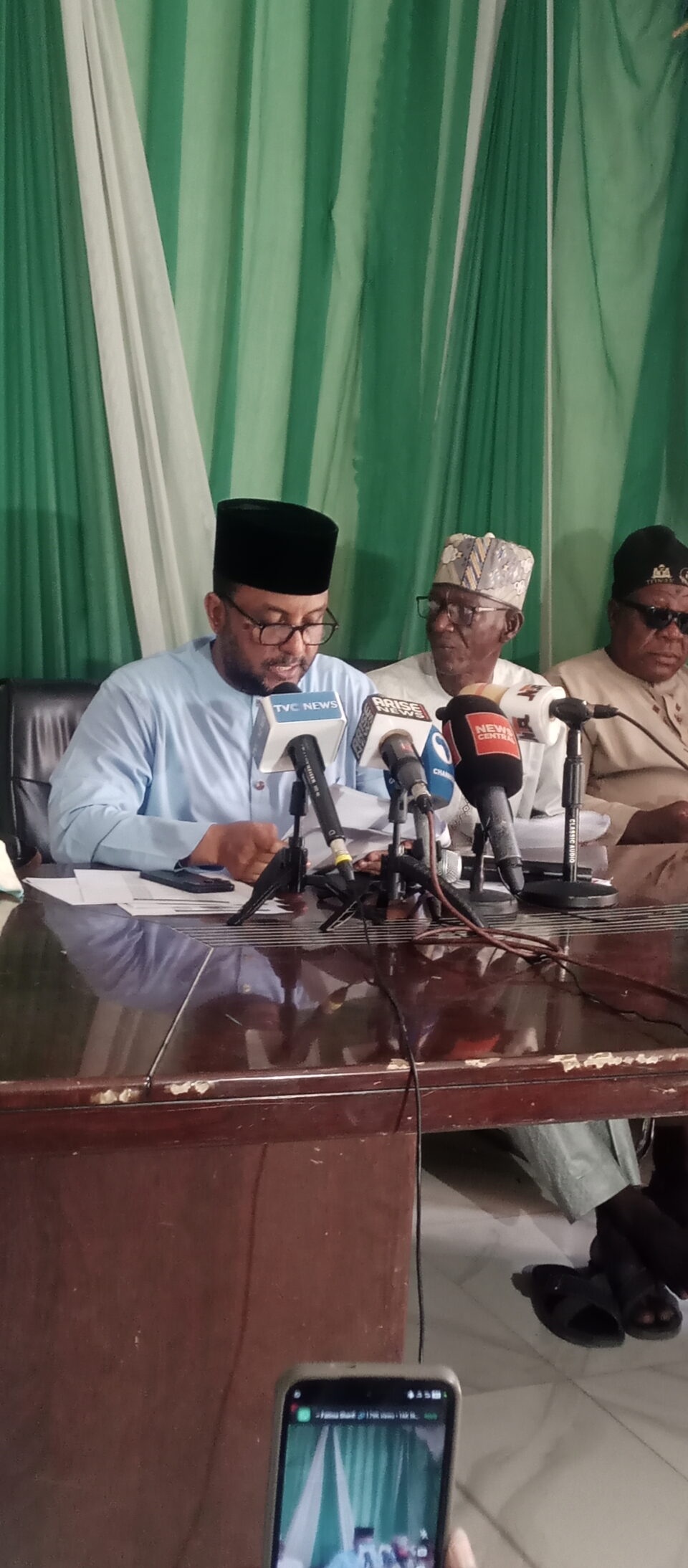
The Spokesperson of the APC Presidential Campaign Council, Mallam Alwan Hassan, has expressed his disgust at the former Vice President, who served Nigeria from 1999 to 2007 and has since been desperate to become President, despite having nothing to offer and now allegedly selling his properties to campaign for the Presidency.
Alwan Hassan told Media at Kano Press Center, Thursday, that “it is extremely offensive that Atiku, who served in an administration and was a member of the Party that created and left many of Nigeria’s longstanding problems unresolved, now presents himself as the answer to those same problems.”
He said, Atiku has run for the presidency again and again, and Nigerians keep turning him down. They know he is not the solution. He is the problem. He has no ideas.
“He went from customs officer to billionaire without ever explaining how. That unexplained wealth has bankrolled him election after election, and he is now reportedly selling off properties to keep his campaign alive. Nigerians are right to worry: if such a man reached office, would he not spend his first four years recouping his investment?”
“Atiku should retire and enjoy whatever is left of his customs-days largesse!” Alwan Hassan told Atiku that, Puublic office is not a place to recover political investments. Nigeria’s treasury belongs to the Nigerian people!
“And on the North, Atiku must account for his record. The people of the North deserve more than declarations of his pretentious concern. What has he done for the North in 27 years? Where are his investments? In Dubai! Yet he wants us to believe he has the North’s interest at heart?”
He said in Northern Nigeria, the administration of President Bola Ahmed Tinubu has undertaken significant investments in road infrastructure, education and regional connectivity.
“Across the region, federal road projects are being constructed, rehabilitated and completed to address longstanding infrastructure deficits and improve economic activities. These interventions are particularly important to the North, where agriculture, commerce and the movement of goods depend heavily on reliable transportation networks.”
Alwan notes, More than 6,000 road projects are ongoing or have been completed across northern Nigeria under President Bola Tinubu. In the North West alone, 348km of roads have been completed, out of 1,016km that have been completed nationwide.
He added that, among the major projects is the Akwanga-Jos-Bauchi-Gombe-Biu-Maiduguri Superhighway, a strategic road corridor connecting the North-Central and North-East geopolitical zones.”In July this year, the Federal Government flagged off construction of the first section of this approximately 700-kilometre highway.”
The initial phase covers about 125 kilometres from Akwanga in Nasarawa State to Jos in Plateau State. When completed, this highway will improve connectivity between communities, facilitate the movement of agricultural produce, reduce transportation difficulties and strengthen economic integration across the region.
“We have also achieved the completion of the first 118-kilometre section of the Abuja-Kaduna-Zaria corridor, including 81 kilometres constructed with reinforced concrete pavement.Work continues on other sections of the highway, while President Tinubu has directed the installation of solar-powered streetlights along the entire 375-kilometre corridor.”
“This is one of the country’s most important transportation routes. It connects the Federal Capital Territory with Kaduna and Kano, two major centres of commerce, industry and population in Northern Nigeria, its rehabilitation is important not only for motorists but also for traders, manufacturers, transport operators and businesses that depend on the movement of goods between these cities.”
The Presidential Campaign Spokesperson, explained that, President Bola Tinubu administration is equally pursuing other major projects, including the Sokoto-Badagry Superhighway, Kano Northern Bypass, Kano-Katsina Road, Zaria-Funtua-Gusau-Sokoto Road and sections of the Kano-Maiduguri Road.
These projects represent substantial investments in the transportation infrastructure required to support agriculture, commerce and industrial development particularly in Northern Nigeria.
“Infrastructure development does not end with roads. Under President Tinubu it also extends to the classrooms where the next generation of Nigerians is being educated, in Kano State alone, the Universal Basic Education Commission (UBEC) has undertaken interventions to improve learning conditions in our public primary schools.
He added that, these include the renovation of more than 50 primary schools across 15 local government areas, the rehabilitation of classroom blocks and the provision of over 16,000 furniture items.
“In July 2026, the Executive Secretary of UBEC, Dr Aisha Garba, confirmed to Nigerians that the Commission had delivered nearly 4,000 classrooms across Kano State as part of efforts to expand access to quality basic education.These important investments in our basic education mean improved learning environments for children, better facilities for teachers and additional support for communities where inadequate educational infrastructure has remained a longstanding challenge.
Alwan Hassan reminded that, when President Bola Ahmed Tinubu assumed office in May 2023, Nigeria faced serious economic challenges. The country was struggling with substantial fiscal pressures, a fragmented foreign exchange market, rising inflation and a public finance system under strain.
“According to the Federal Government’s State of the Economy presentation delivered to the Federal Executive Council on 28 October 2026, Nigeria’s economy grew by only 2.74 per cent in 2023.
He said, at the beginning of the administration, the country had net usable external reserves of approximately $859 million, despite gross reserves of about $35 billion. The foreign exchange market was characterised by multiple windows and a spread exceeding 60 per cent.
“The tax-to-GDP ratio stood at approximately 7 per cent, while debt servicing consumed about 97 per cent of government revenue. These were substantial economic challenges.
However, the administration of President Tinubu,cresponded with reforms intended to address the structural weaknesses in public finance, foreign exchange management and the allocation of national resources. The removal of petrol subsidy and the restructuring of the foreign exchange market were among the most consequential decisions. They also imposed significant adjustment costs on Nigerians.
Nearly three and a half years into the administration, the available economic indicators provide an opportunity to assess the progress that we have made.
The Nigerian economy recorded real GDP growth of 4.43 per cent in the second quarter of 2026, compared with annual growth of 2.74 per cent in 2023.
“Headline inflation stood at 14.63 per cent in September 2026, according to the latest figures presented by the Federal Government. Nigeria’s gross external reserves reached $55.1 billion on 9 October 2026, with net reserves reported at approximately $46 billion.
He said, the Federal Government also reported that our foreign exchange market spread had narrowed to less than 5 per cent. The tax-to-GDP ratio increased from approximately 7 per cent to 12.5 per cent, while the ratio of debt service to government revenue declined to approximately 65 per cent in the first half of 2026.
“These figures point to changes in the country’s fiscal and macroeconomic position. They are evidence that President Tinubu’s economic policies are putting Nigeria in the right direction and affirm that we are achieving economic stability. This economic stability we are achieving is providing the foundation for investment, business expansion, employment creation and sustainable public expenditure.
One important consequence of the economic reforms has been the increase in resources available to the three tiers of government. According to official records of the Federal Government, net Federation Account Allocation Committee (FAAC) distributions increased from N15.2 trillion in 2024 to N21.9 trillion in 2025. That is an increase of approximately 44 per cent.
“The share of state government expenditure devoted to capital projects increased from 46 per cent in 2023 to 61 per cent in 2025. Improved allocations to states is providing our sub-regional governments with greater fiscal capacity to invest in roads, schools, healthcare facilities, water infrastructure and other essential public services.


