
2027 Elections: Journalists Must Know Legal Boundaries, Ethical Obligations, Barrister Abdulsalam
From Muhammad Kabir, Kano
A Legal Luminary, Yusuf Abdussalam, has task the Nigeria journalists to equipped themselves with understanding of the distinction between legitimate public-interest reporting and publications that could violate existing laws, damage reputations or threaten public peace.
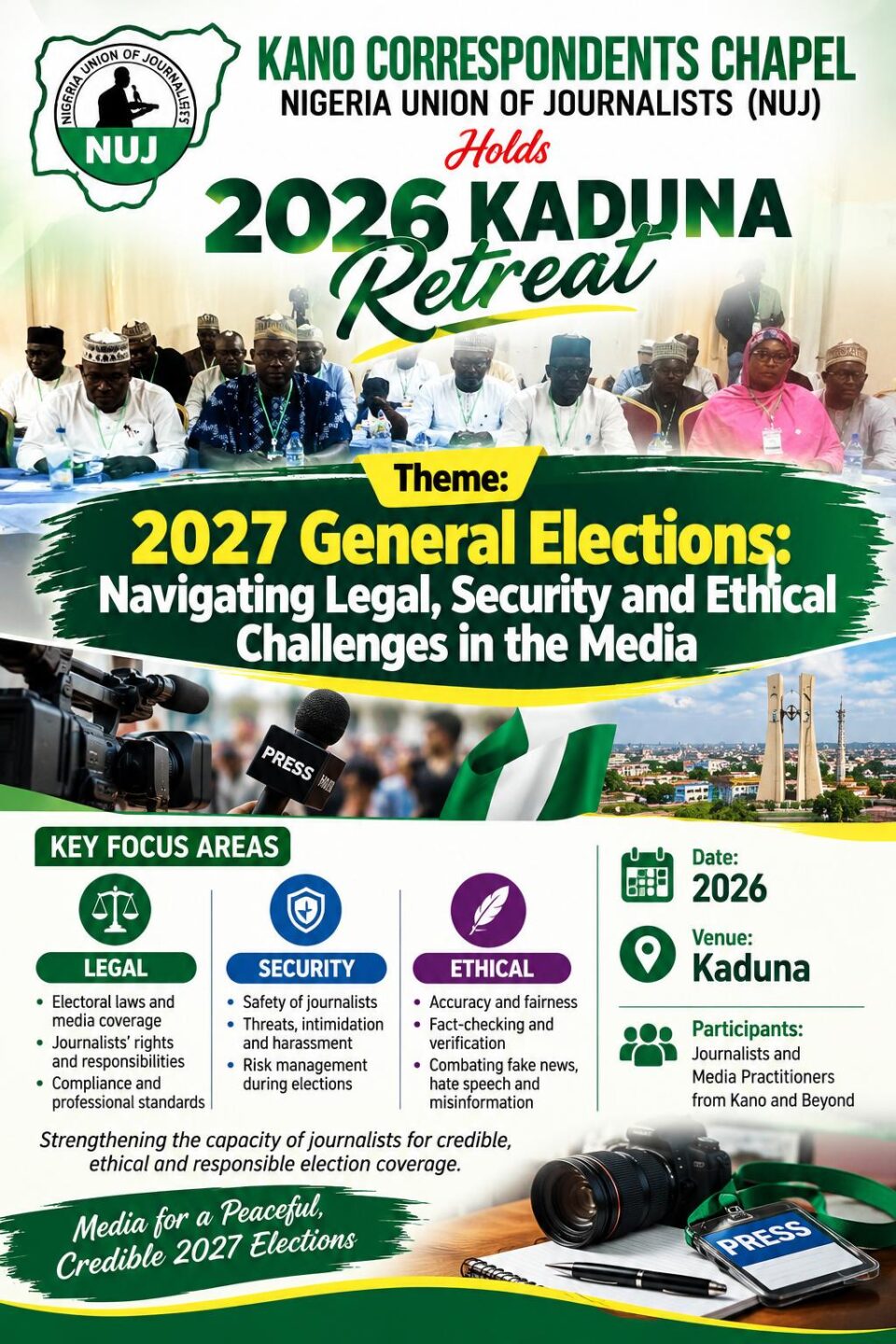
Speaking during the Kano Correspondents Chapel of the Nigeria Union of Journalists (NUJ) 2026 retreats in Kaduna, with a strong focus on the legal, security and ethical responsibilities of journalists ahead of the 2027 general elections, Barrister Abdussalam, said it becomes necessary for the Nigeria Journalists to know the boundaries of Laws to avoid falling into bubbles traps.
The retreat, themed “2027 General Elections: Navigating Legal, Security and Ethical Challenges in the Media,” brought together journalists and media practitioners to examine the challenges associated with election reporting and the responsibilities of the media in safeguarding the credibility of the electoral process.
Speaking on “Legal Boundaries and Ethical Obligations in Election Reporting,” Barrister Abdulsalam Yusuf urged journalists to familiarise themselves with the laws governing elections and the limits placed on media reporting.
He stressed that freedom of the press comes with corresponding responsibilities, particularly during politically sensitive periods.
According to him, journalists must understand the distinction between legitimate public-interest reporting and publications that could violate existing laws, damage reputations or threaten public peace.
“The media has a constitutional responsibility to inform the public, but that responsibility must be exercised within the boundaries of the law and professional ethics,” Yusuf said.
He advised journalists to exercise caution when reporting allegations, political claims and unverified information, stressing the importance of giving affected persons the opportunity to respond before publication.
“A journalist must not become a tool for spreading unverified allegations. Accuracy, fairness, balance and verification are essential, especially during an election when a single report can have serious consequences,” he said.
Yusuf further urged media practitioners to distinguish between facts, opinions and claims made by political actors, particularly in an era where social media platforms have accelerated the spread of misinformation and disinformation.
He noted that journalists have a duty to independently verify information before publishing or broadcasting it, regardless of the source.
“What a politician says at a rally is not automatically a fact simply because it was said publicly. The responsibility of the journalist is to verify the claim and present the public with accurate information,” he stated.
The legal practitioner also cautioned journalists against hate speech, inflammatory reporting and language capable of escalating political tensions or inciting violence.
He said responsible election reporting should contribute to peaceful democratic participation rather than deepen divisions among political parties, candidates and their supporters.
The retreat also examined the security challenges confronting journalists during election periods, including threats, intimidation, harassment and other risks associated with covering political activities.
Participants were encouraged to prioritise their personal safety while maintaining professional independence and ensuring that security concerns do not compromise the quality and credibility of their reports.
Discussions at the retreat further focused on the importance of fact-checking, fairness, balance, responsible use of social media and adherence to professional codes of conduct.
Speakers emphasised that journalists must remain particularly vigilant ahead of the 2027 general elections, given the growing influence of digital platforms and the rapid circulation of fake news and politically motivated content.
The organisers said the retreat was aimed at strengthening the capacity of journalists to provide credible, ethical and responsible coverage of the electoral process.
The Kano Correspondents Chapel expressed optimism that the programme would equip participants with practical knowledge and professional skills to navigate the legal and ethical challenges of election reporting while safeguarding both the safety of journalists and the integrity of the profession.
The retreat is expected to further deepen discussions on the role of the media in promoting peaceful elections, informed public participation and confidence in Nigeria’s democratic process.

