
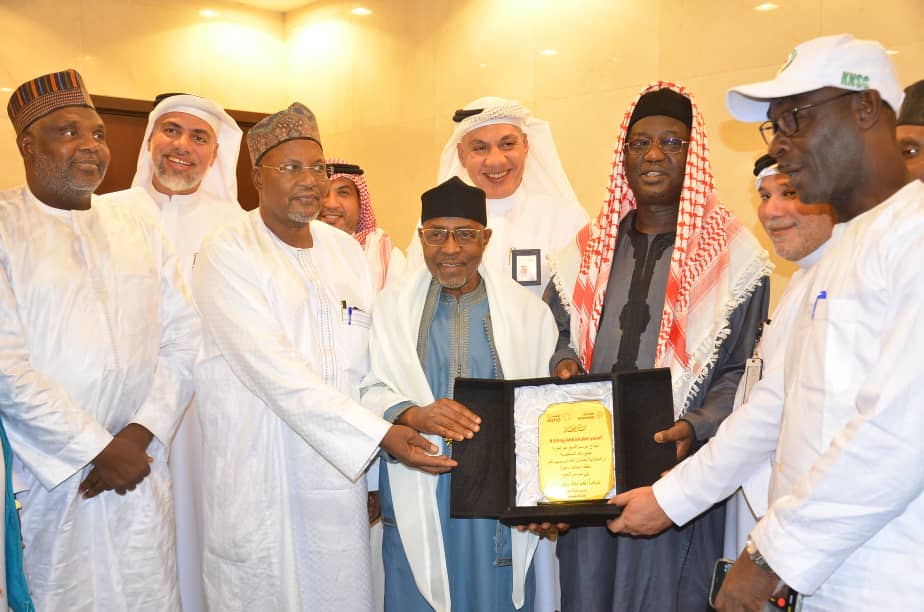
Kano 2026 Hajj: Dignity On The Journey, Excellence In Leadership
By Lamara Garba
For Kano pilgrims, the 2026 Hajj was not just a religious obligation fulfilled. It was a journey defined by dignity, comfort, and the quiet confidence that comes from being well cared for.
From transit at the Hajj Camp to departure through Malam Aminu Kano International Airport (MAKIA), from King Abdulazeez Airport Jeddah to Madinah, from Madinah to Makkah, and through Mina, Arafat Holy sites, and the return home journey, the operation ran with remarkable calm. There were no chaotic scenes, no avoidable crises. What stood out instead was order: order in movement, order in service, and order in conduct. That order did not happen by accident. It was deliberate and organised.
The first signal came early. The airlift was orderly. The transfer from Jeddah to Madinah was smooth. The road movement from Madinah to Makkah followed the same pattern. Even the return journey from the Holy Land was largely uneventful. For thousands of people moving across borders and holy sites, the absence of disruption is itself a statement. It meant pilgrims could focus on worship, not on logistics. Anxiety was replaced with peace of mind.
The machinery behind it was complex: accommodation, feeding, water, transportation, welfare support in a foreign land. Yet for Kano, much of it worked. Meals were regular and nourishing, supplemented with fruits and soft drinks. Drinking water was available without interruption, even during the most demanding days. Accommodation in Madinah, Makkah, Mina and Arafat was decent and well managed. The 24-hour shuttle service in Makkah made access to the Grand Mosque easier, freeing pilgrims to spend their time in prayer rather than in transit.
The token financial support from the Kano State Government also mattered. Beyond the cash value, it sent a message that the government saw the sacrifice and chose to share the burden. These interventions created something more valuable than convenience. They created confidence.
But good administration alone does not make a successful Hajj. The conduct of the pilgrims did. Throughout the exercise, Kano pilgrims showed patience, discipline, and respect for authority. There was no rancour, no unnecessary confrontation. They carried themselves in a way that preserved the dignity of Kano and reflected well on the state.
That mutual respect between service providers and pilgrims is what made large-scale logistics manageable. Government provided the facilities, and citizens responded with responsibility. That partnership is the difference between a trip and a dignified pilgrimage. In a gathering of thousands, the absence of serious disorder is not a minor footnote. It is proof that the system worked on both sides.
Recent reporting has independently affirmed the success of the 2026 Kano operation, with specific commendation for Governor Abba Kabir Yusuf and the Kano State Pilgrims Welfare Board. The recognition reportedly extended by the Mutawwaf to the governor adds weight. When praise comes from outside the state’s own administrative structure, it suggests the experience was visible beyond Kano.
At the center of that administration was Alhaji Ibrahim Abubakar Matawalle, Director General of the Board. Hajj is not managed in press statements. It is managed in whether food arrives on time, water does not run out, buses run on schedule, and assistance reaches a pilgrim in need. Across those details, the Board performed. The success of the operation must therefore be viewed not only as an administrative achievement, but as a welfare achievement judged by the experience of the pilgrim.
Guidance also came from the Amirul Hajj, the Emir of Gaya, Alhaji Aliyu Ibrahim Abdulkadir. In an operation involving thousands of people and multiple agencies, temperament matters. His calm, humble leadership set the tone and provided direction without noise. His deputy, the Emir of Karaye, Alhaji Maharaz Abubakar, played an important supporting role. Together, they reinforced the contribution of traditional institutions and gave the delegation a reassuring sense of guidance throughout the journey.
Hajj strips governance to its essentials. Policies are tested not in memos, but in meals, beds, buses, and water. A pilgrim who receives a nourishing meal, finds clean drinking water, sleeps in decent accommodation, boards a shuttle to the Haram, and receives help when needed is experiencing government in its most practical form. When public resources are administered with competence and care, they translate directly into comfort and dignity.
Kano’s 2026 experience also highlights the importance of collective leadership. The governor provided political direction and support. The Board translated that direction into administration. The Amirul Hajj offered guidance. Traditional rulers added wisdom and authority. Officials managed logistics. And the pilgrims completed the chain by behaving responsibly. When each link performs its responsibility, the people become the ultimate beneficiaries.
The scale of the operation alone makes the achievement significant. Moving thousands of pilgrims across different locations, in a foreign country, requires meticulous planning and constant supervision. For Kano pilgrims, that machinery largely delivered. They were moved from the Hajj Camp to MAKIA, from Jeddah to Madinah, from Madinah to Makkah and eventually back home with remarkable order. They were fed adequately. Drinking water was available without interruption. They enjoyed decent accommodation in the two Holy cities and at the Holy sites. They had access to 24-hour shuttle buses. They received financial support from the state.
But perhaps the greatest achievement was the dignity that characterised the entire experience. The pilgrims were treated with respect, and they reciprocated that respect.
Hajj will always be a spiritual test first. No amount of administrative excellence can replace the faith, sacrifice and devotion required of the pilgrim. But good administration can remove avoidable burdens and create the conditions in which worship can be performed with greater peace of mind. That appears to be what Kano achieved in 2026.
The commendation therefore belongs to Governor Abba Kabir Yusuf for the political support provided, to Alhaji Ibrahim Abubakar Matawalle and his team for administrative diligence, to the Amirul Hajj for calm and purposeful leadership, and to his deputy for valuable support. It also belongs to the pilgrims themselves. They travelled with dignity, worshipped with devotion and returned with honour.
Leadership, ultimately, is not simply about taking people somewhere. It is about ensuring that they make the journey with dignity and return with gratitude. Kano’s 2026 Hajj has provided a powerful illustration of that principle. It shows that when government puts the welfare of its people first, good governance stops being an abstract political promise.
It becomes something people can eat, drink, experience, remember, and ultimately thank their leaders for.
Lamara Garba was a member of the 2026 Hajj Media Team


